La Dolce Vita, Made in the USA
There is a scene from the 1953 film Roman Holiday in which Audrey Hepburn rides a Vespa through the streets of Rome — smiling, free, enchanted. That scene shaped the image of Italy in the American imagination for generations. Over 70 years later, the fascination remains undiminished. Millions of Americans dream of Italy, and millions turn that dream into reality.
According to the Italian National Institute of Statistics (ISTAT), around 5.8 million tourists from the United States visited Italy in 2019. That makes America the second-largest foreign visitor group after Germany. Combined with their spending of an average €1,200 per person per trip (according to the Bank of Italy), US tourists left over €7 billion in the Italian economy in 2019 alone.
Why America Loves Italy
The cultural wealth is the most obvious argument. No other country in the world has as many UNESCO World Heritage Sites as Italy — 58 in 2024. The Colosseum, Pompeii, the Uffizi in Florence, the gondolas of Venice, the Cinque Terre. These images are embedded in the collective memory of humanity and have been taught in American schools for generations.
Then there is the heritage factor. More than 17 million US citizens report having Italian ancestry, particularly in New England, New York, New Jersey, and Chicago. For many, a trip to Italy is not an ordinary holiday but a pilgrimage to their own roots. Visiting a small village in Calabria or Sicily, searching for the old family name in church records, having a conversation with a cousin you have never met: that is an experience no other destination can replace.
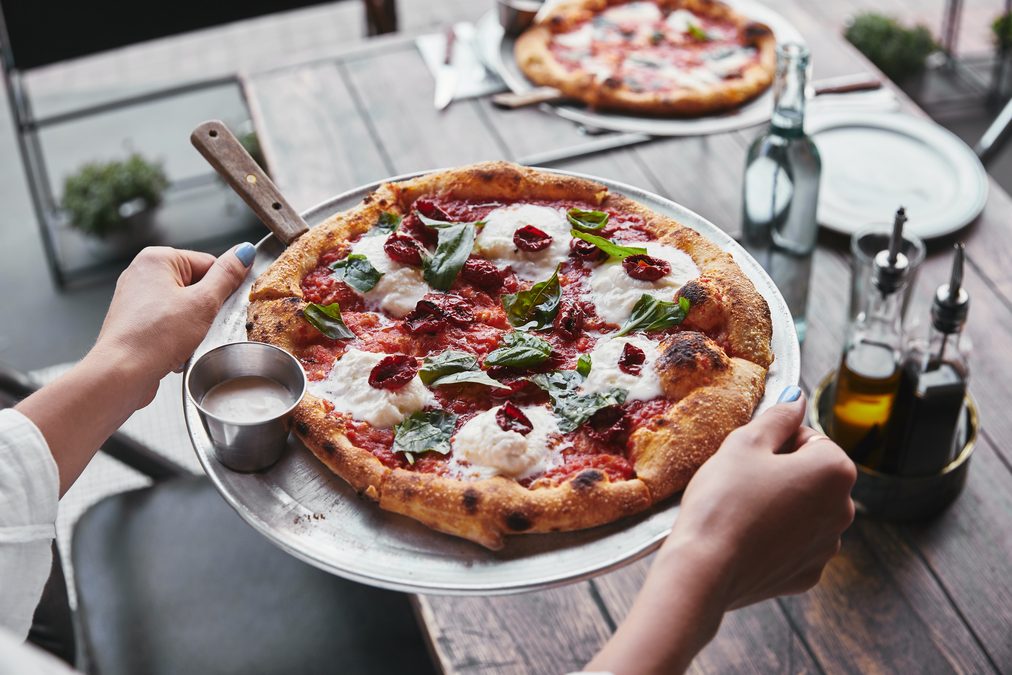
And finally: the food. American culinary culture is deeply shaped by Italian cuisine, even if pizza and pasta in the US are often far removed from their origins. Eating the real thing in Naples, tasting an authentic carbonara in a small Roman trattoria — for many Americans, that is a culinary awakening.
The Most Popular Destinations
Rome remains the undisputed number one. The Vatican, the Trevi Fountain, the Roman Forum, the Spanish Steps, the Pantheon: hardly any American European trip bypasses the Eternal City. Daily visitor numbers at the Vatican Museums regularly exceed 20,000 in summer.
Florence follows close behind. The Uffizi with Botticelli's Birth of Venus, the Ponte Vecchio, the Tuscan hills visible from San Miniato al Monte: Florence fulfils every art lover's dream. However, the city is battling massive overtourism and has been discussing access restrictions for years.
Venice is a chapter in itself. The city receives around 25 million visitors per year, many of them Americans. In 2024, a day fee of five euros for day visitors was introduced — the first such measure by a European city. On the rise: Sicily, which gained massive visibility through the series The White Lotus (season two was filmed in Taormina).
Spending and Economic Impact
American tourists are above-average spenders in Europe. They are more likely than other visitor groups to book five-star hotels, private tours, and exclusive restaurant experiences. According to the World Travel and Tourism Council, US tourists contribute more per capita to the local economy than any other non-European travel group.
Top-tier hotels such as the Hotel Hassler in Rome or the Belmond Villa San Michele in Florence reportedly generate 30 to 40 percent of their revenue from American guests — a figure that illustrates how important this market is for the premium segment of Italian hospitality.
After COVID: Fast Recovery and New Trends
The COVID crisis hit US tourism to Italy dramatically. In 2020, fewer than 600,000 American tourists visited. The recovery, however, was exceptionally fast: by 2022, numbers were already back above 4 million, and in 2023 they surpassed pre-pandemic levels for the first time.
A new trend is driving the growth: experiential travel. Cooking classes in Bologna, wine tours in Piedmont, olive oil workshops in Tuscany, ceramic painting in Deruta. American travelers — especially Millennials and Gen Z — are increasingly seeking experiences over consumption. And Italy offers more of these than almost any other country in the world.
Discovering Southern Italy: The New Trend Off the Beaten Path
While Rome, Florence, and Venice are bumping up against tourist capacity limits, more and more American travelers are discovering the other Italy: Puglia with its white trullo houses, Calabria with wild mountains and crystal-clear sea, Basilicata with the cave city of Matera — European Capital of Culture in 2019.
These regions have less English-language signage and fewer tourist restaurants, but offer genuine encounters instead. For Americans with southern Italian roots whose ancestors came from Calabria or Sicily, these places are not travel destinations — they are an emotional homecoming. Nothing changes a person quite like the feeling of touching the origins of their own family.
EU investment in southern Italy has improved infrastructure. Agriturismo properties offer authentic accommodation in the middle of olive groves. Cooking classes with nonnas who still know the traditional recipes are fully booked. Hiking routes through the Pollino National Park or along the Calabrian coast open up a nature that mass tourism has yet to discover.
Those who truly want to get to know Italy should head south. That is where the country's heart beats more quietly, more authentically, and more unforgettably.
Practical Tips for American Travelers in Italy
American travelers in Italy encounter some differences that can come as a surprise. Restaurants in Italy do not automatically bring water — you must order it and pay for it. Ordering a cappuccino after lunch is considered a tourist move; Italians drink it in the morning. Tipping is customary in small amounts but not obligatory the way it is in the United States.
Practical travel tip: the major museums — above all the Uffizi in Florence, the Colosseum in Rome, and the Vatican — should be reserved online weeks in advance. Those who turn up without a booking often find daily tickets sold out or face very long queues.
Dress code for churches: shoulders and knees must be covered. A light scarf or wrap jacket in your bag saves trouble at entrance checks. This applies to St. Peter's Basilica just as much as to the smallest village church in Tuscany.
The beautiful thing: Italy is a country that reveals more of itself to patient visitors. Those who stay two weeks instead of five days, take side streets instead of main tourist routes, and talk to locals instead of just taking photos, experience a country of inexhaustible depth. No guidebook fully captures it.