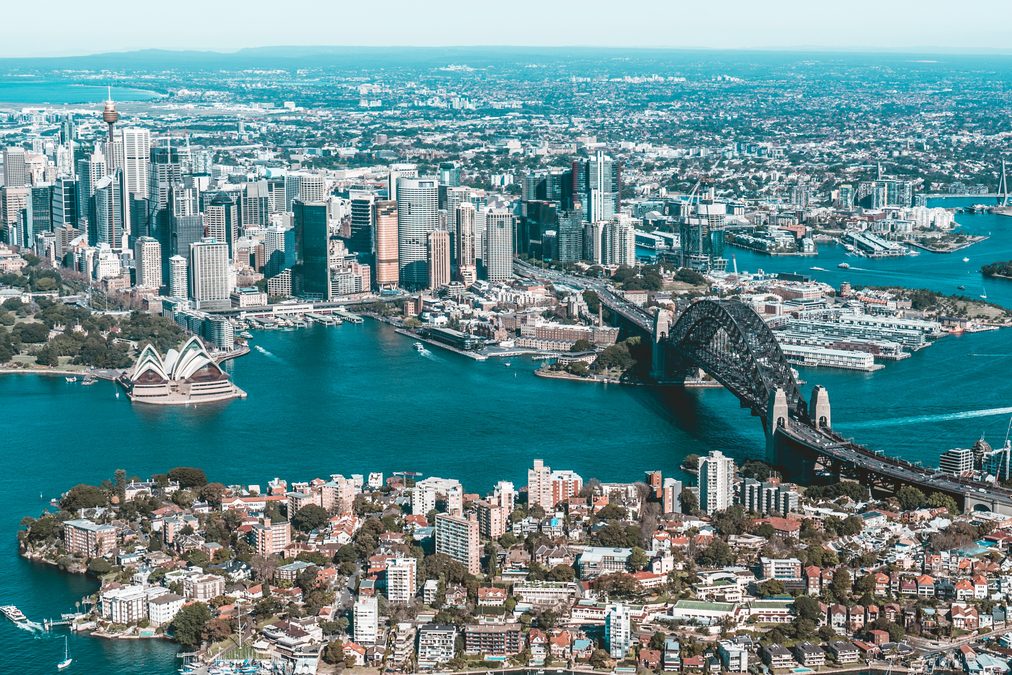
Down Under as a Place to Live
Australia is the dream that becomes reality for a surprisingly large number of people. The country at the end of the world — known for kangaroos, the Great Barrier Reef, and dangerous spiders — is in fact one of the most liveable and economically stable countries on Earth. And it wants immigrants: actively, deliberately, and in an organised way.
More than 100,000 Germans live permanently in Australia according to the Australian Bureau of Statistics. They are spread across cities like Sydney, Melbourne, Perth, and Brisbane, having settled in a country that has more in common with Germany than one might expect: a strong engineering culture, punctuality as a social value, a pronounced sense of safety, and a world-class education system.
What Makes Australia Appealing
Australia offers what might be described as the Anglo-Saxon lifestyle at its maximum: high wages, more outdoor living, less formality, and stunning nature right on the doorstep. An engineer in Sydney earns an average of around AUD 90,000 to 110,000 gross, which after tax enables a comfortable life.
The climate is excellent in most inhabited regions. Perth is the sunniest major city in the world, with more than 3,200 hours of sunshine per year. Sydney has mild winters and warm summers. Queensland borders on the tropics. Only those who head south experience genuine winter cold.
Cultural adjustment is easier for Germans than in non-Western countries. Learning English as an everyday language takes effort, but the social values — democracy, rule of law, social security — are comparable to the German system.
Skilled Migration: The Australian Path
Australia's immigration system is explicitly geared toward economic needs. The most important route for Germans is Skilled Migration, similar to Canada's Express Entry. Australia regularly publishes the Skills Occupation List, which shows which professions are in urgent demand.
Engineers, IT specialists, doctors, nurses, tradespeople, and teachers regularly appear on the list. A 34-year-old mechanical engineer with five years of experience has a good chance of obtaining a permanent visa through the General Skilled Migration Program (Subclass 189 or 190).
Those under 31 also have the option of the Working Holiday Visa (WHV), which allows an initial stay of one year and can be extended. Many Germans use the WHV as a first step to get to know the country and find an employer who will support the further visa process.
Costs and the Reality of Daily Life
Australia is expensive. Groceries, rents in major cities, restaurants: everything is at or above German levels. Sydney and Melbourne are among the most expensive cities in the world for housing. A two-bedroom apartment in Sydney costs AUD 2,500 to 4,000 per month — around €1,500 to €2,500.
The cost of living is real, but so are the wages. And the Australian Superannuation system — a mandatory employer pension contribution of 11 percent of gross salary (as of 2024) — automatically builds up a retirement fund. Those who stay long enough benefit considerably from this.
Space, Freedom, and Safety
What sets Australia apart from almost every other country on this list is sheer scale. 7.7 million square kilometers of land, almost entirely uninhabited in the interior, but with a coastline of unmatched beauty. On an ordinary Saturday, Australians can be at the beach, hiking in nature, or wine tasting in the Barossa Valley. This closeness to nature changes how you live.
Australia has some of the strictest gun laws in the world. Crime rates in all major cities are low. The public health system (Medicare) is well-funded and functional. This makes Australia particularly attractive for families. Those who have truly arrived here rarely go back.
Perth: Australia's Most Overlooked Major City
Sydney and Melbourne dominate the image of Australia in German minds. Yet Perth on the western coast has qualities that are particularly relevant for emigrants: more hours of sunshine than any other major Australian city, a more relaxed pace of life, cheaper property prices than Sydney, and an economy made structurally robust by its mining and resources sector.
Perth is the most isolated major city in the world. The nearest comparable city is Adelaide, over 2,700 kilometers away. That sounds like a disadvantage, but for many residents it is a plus: less through-traffic, less hustle, more community. The city has developed over the last twenty years from a provincial outpost into a modern, open-minded metropolis.
The shortage of skilled workers in Western Australia's mining and engineering sector often makes it easier for qualified German immigrants to get started than elsewhere. Some companies actively support the visa process and offer relocation assistance. Anyone working as an engineer, geologist, or in IT should seriously consider Perth.
The sea is everywhere. Cottesloe Beach, Scarborough, Fremantle: you are at the beach within 30 minutes. This is not a holiday promise — it is everyday life. And at some point, as every Perth resident will tell you, you can no longer imagine a life without that sea.
The Australian Work-Life Balance: A Lesson for German-Born Immigrants
Australians work to live. That is not a catchphrase — it is a structural social principle. Unpaid overtime is far less common in Australian companies than in Germany. Holiday leave is actually taken. Friday evening conversation revolves around the weekend, not the project.
For Germans accustomed to a work culture in which overwork is treated as a virtue, this is initially disorienting and then liberating. The first reaction is often: but do things still get done? Yes, they do. Simply more efficiently, without drama, and without overtime as a personality trait.
The Australian phrase "No worries," applied to almost every situation, is not indifference. It is a cultural buffer that reduces stress and smooths social interaction. Anyone who learns to take "no worries" seriously lives longer. That is not a cliché.
Für deutsche Einwanderer ist diese Erfahrung oft transformativ. Man kommt mit einer Erwartungshaltung an Leistung und Perfektion und lernt, dass die Welt auch dann weitergeht, wenn nicht alles perfekt ist. Manche nennen das die wichtigste Lektion, die sie in Australien gelernt haben. Wichtiger als Visum, Sprache und Karriere zusammen.