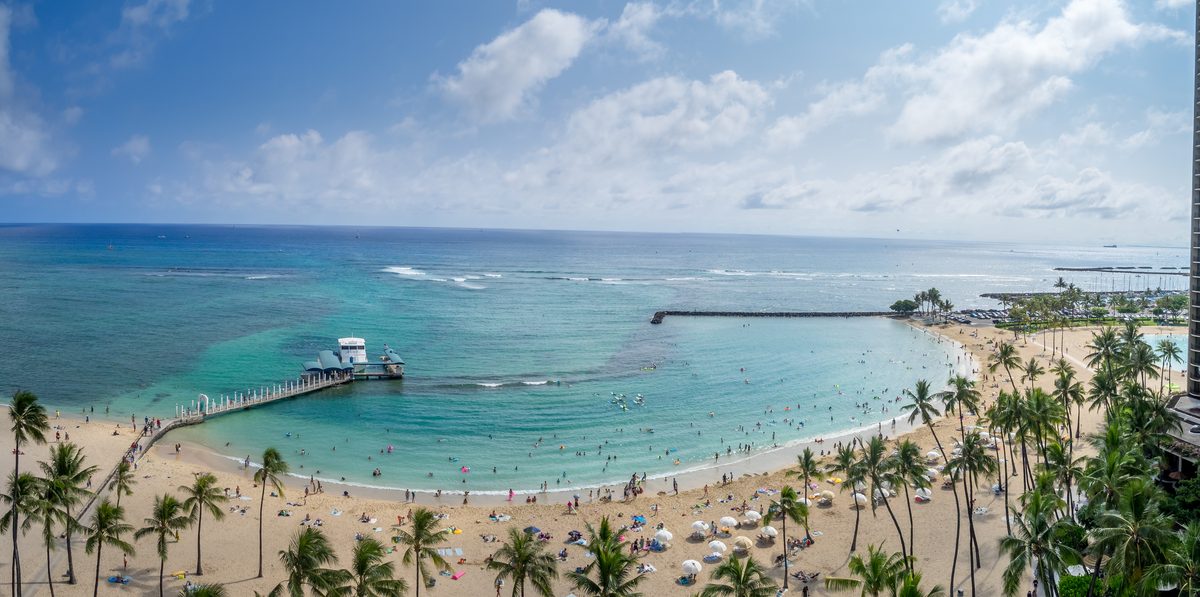
Aloha in Japanese
First-time visitors strolling through Waikiki on Oahu do a double take. Japanese signs on restaurants, salespeople addressing you in Japanese, tour groups with Japanese flags, hotels serving Japanese breakfast. Hawaii is American territory, but it sometimes feels like a Japanese neighborhood abroad — with a beach.
That is not an exaggeration. In 2019, according to the Hawaii Department of Business, Economic Development and Tourism (DBEDT), around 1.58 million Japanese tourists visited the US state. That is the largest international visitor group of all, ahead of Canadians, Australians, and Koreans. And this flow has not let up for decades.
The History of a Special Connection
The connection between Japan and Hawaii has a historical depth that goes far beyond tourism. As early as the late 19th century, tens of thousands of Japanese emigrated to Hawaii as plantation workers on the sugarcane and pineapple fields. Today, roughly a third of the Hawaiian population is of Japanese descent. Japanese family names, temples, and festivals are a fundamental part of Hawaiian identity.
This cultural rootedness makes Hawaii feel simultaneously foreign and familiar to Japanese tourists. You are in America, but you see faces like home, can read signs, and find restaurants that know exactly what a Japanese guest expects.
Japanese honeymoon couples discovered Hawaii in the 1970s and 80s as an affordable dream destination with white beaches, American modernity, and tropical nature. This trend has endured: Hawaii remains one of the most popular wedding and honeymoon destinations for Japanese couples to this day.
What Fascinates the Japanese About Hawaii
The ocean comes first. Snorkeling, surfing, stand-up paddling, whale watching from January to March, watching turtles on the beach. For Japanese visitors who come from an island nation and love the sea, but often have little holiday time, Hawaii offers maximum natural experience in minimum travel time.
Then there is the shopping. Ala Moana Center — one of the largest outdoor shopping malls in the world — is essential viewing for Japanese tourists. Luxury brands that are more expensive in Japan, and American products barely available at home, draw shoppers just as much as the duty-free shops at the airport.
An underappreciated factor is prestige. Hawaii is regarded in Japan as a destination of the upper middle class. Having been to Hawaii signals taste and financial means. In a society where status is communicated subtly, that is not an insignificant reason to travel.
Economic Significance for Hawaii
Japanese tourists are one of the most important economic pillars of Hawaii. According to DBEDT, Japanese visitors spent an average of around $259 per person per day in 2019 — significantly more than the average across all international guests. In total, they contributed around $2.1 billion to the Hawaiian economy.
Hotels on Oahu and Maui are perfectly attuned to Japanese guests: Japanese breakfast, yukatas (light kimonos) in the rooms, Japanese-speaking concierge teams, partnerships with Japanese tour operators. A hotel that does not offer this standard loses a significant share of Japanese bookings.
The COVID Collapse and the Difficult Road Back
Japan kept its borders closed to outbound travelers longer than almost any other democracy. Only from autumn 2022 was free travel possible again. In 2023, around 830,000 Japanese tourists visited Hawaii — well below pre-pandemic levels.
A structural problem is slowing the recovery: the yen is weak. A strong dollar and a weak yen make Hawaii noticeably more expensive for Japanese travelers than it used to be. What was comfortably affordable in 2019 now costs significantly more. Many Japanese families are shifting to cheaper alternatives such as Okinawa, Guam, or South Korea.
Nevertheless, the emotional bond is too strong for price alone to dominate the decision. For Japan, Hawaii is more than a travel destination. It is part of a shared history that no exchange rate can dissolve.
Maui and the Outer Islands: Japan's Love of Hawaii's Hidden Sides
While Oahu with Waikiki remains the best-known face of Hawaii, knowledgeable Japanese visitors have discovered the other islands. Maui — known as "The Valley Isle" — draws Japanese couples with romantic sunsets over the Haleakalā crater and exclusive resorts in Wailea. Kauai, the oldest of the main islands, offers nature of otherworldly beauty in the Na Pali Coast State Wilderness Park.
The Big Island fascinates with its active volcanoes. Hawaii Volcanoes National Park, where lava still flows into the sea, is a spiritual experience for many Japanese nature lovers. In a culture that venerates natural forces and pays respect to fire in Shinto shrines, a rumbling volcano carries a meaning that goes beyond tourism.
Japanese wedding resorts on Maui and the Big Island specialise in Japanese ceremonies: traditional kimonos, Japanese flower arrangements, shiromuku (white bridal gowns) on the beach. This niche has become its own industry, turning over millions of dollars annually.
For Japan, Hawaii remains more than an island. It is a place where you can feel your own history — the legacy of the immigrants who put down roots here, and the beauty they found.
Language, Culture, and Mutual Understanding
A remarkable feature of the Hawaii-Japan relationship is the linguistic dimension. Many workers in Hawaii's tourism industry speak Japanese — often fluently. Museums and parks offer Japanese-language audio guides, signs in Japanese script, and Japanese guidebooks.
At the same time, more and more Japanese are learning English not only for academic reasons but because Hawaii motivates them to do so. A language stay in Honolulu combined with a beach holiday is popular among Japanese young people. The United States as a whole feels abstract to many Japanese. Hawaii is the human, accessible entry point.
What Hawaii has learned from Japan: precision in service. The Japanese service philosophy of omotenashi — total attentiveness to the guest — has left its mark on Hawaii's tourism culture. Hotels and restaurants that specialise in Japanese guests often maintain a service standard that goes beyond the American average.
It is a mutuality that has been building for decades. Not dramatic, not visible — but deep.