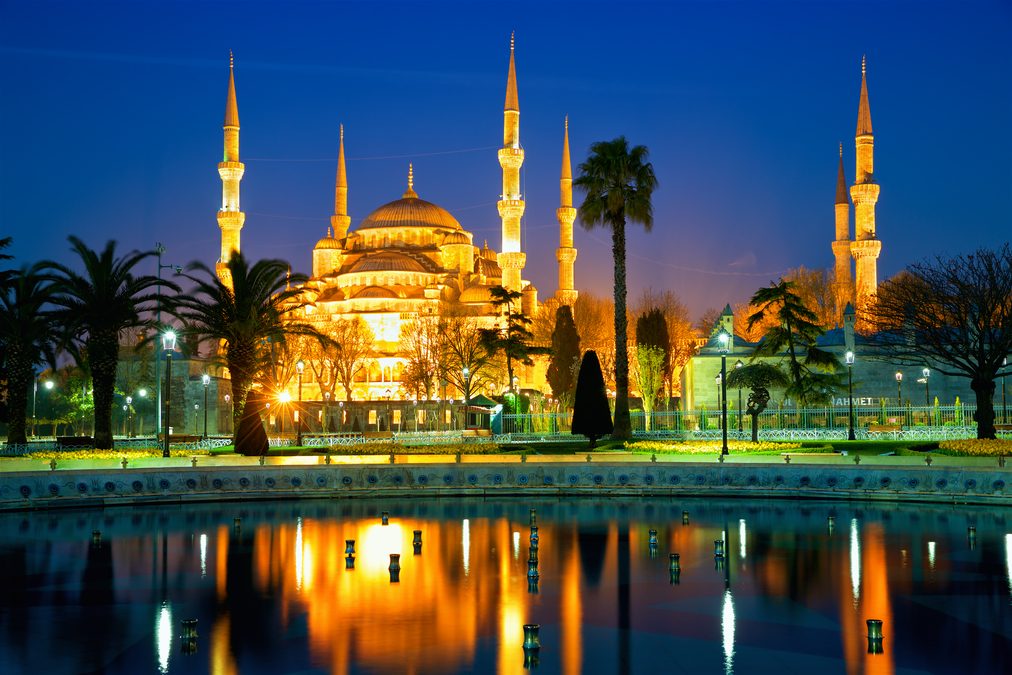
A Partnership With History
Turkey and Russia share two thousand years of history: wars, trade routes, geopolitical rivalries, and recurring diplomatic crises. In the modern sense, the tourist relationship began after the collapse of the Soviet Union in the 1990s, when Russian citizens were able to travel freely for the first time and discovered Turkey's Mediterranean coastline.
What began as a novelty became routine. In 2019, according to the Turkish Statistical Institute TUIK, around 7 million Russian nationals travelled to Turkey, making Russians regularly the largest or second-largest international visitor group in the country. Since the outbreak of the war in Ukraine in 2022, that dominance has grown even further.
Antalya: The Heart of Russian Tourism in Turkey
At the centre of this travel relationship lies Antalya. The province on Turkey's Mediterranean coast, sometimes called the Turkish Riviera, is home to thousands of hotels, many of which embody the all-inclusive concept in its most intensive form: round-the-clock buffets, multiple pools, entertainment teams, private beaches with their own infrastructure, and evening shows.
Russians love this model for a simple reason: predictability. You pay a flat rate and know exactly what you are getting. No unexpected restaurant bills, no unpleasant surprises. In a time of economic uncertainty at home, that is an enormous comfort factor.
In some hotels along the Antalya coast, you hear virtually nothing but Russian. Staff speak the language, menus are in Russian, Russian television channels play in the rooms. It is a holiday that is simultaneously foreign and familiar.
Geopolitics as a Tourism Factor
The war in Ukraine has reconfigured global tourism flows, and Turkey has benefited more than any other country. Europe and North America became largely inaccessible to Russian tourists through sanctions, flight bans, and visa restrictions. Turkey remained open.
President Erdogan pursues an independent foreign policy and has neither imposed sanctions on Russia nor closed his airspace. This allowed direct flight connections from Russian cities to Antalya and Istanbul, while other European destinations became unreachable.
In 2022, Russian tourist numbers in Turkey rose to over 5 million, despite the war breaking out in February. In 2023, they climbed to a record of around 6.7 million. For the Turkish economy, this is a blessing. For geopolitical analysis, it is a fascinating example of how realpolitik and tourism go hand in hand.
Istanbul: History Between the Lines
Beyond beach holidays, Istanbul attracts a growing number of Russian cultural tourists and long-term residents. The city is rich in history: the Hagia Sophia, Topkapi Palace, the Grand Bazaar, the Bosphorus, the Golden Horn. Few other cities in the world offer a denser layering of historical eras.
Since 2022, Istanbul has also become an important hub for Russian expatriates. Tens of thousands of Russians, many of them well-educated and affluent, have settled in Istanbul to escape the war and its economic consequences. Property purchases by Russian nationals in Istanbul have surged sharply.
Dependency as a Risk
Turkey's Russia orientation has created a structural vulnerability. In the past, Moscow has used tourism as a political lever: in 2015, after a Russian military jet was shot down by the Turkish air force, Russia effectively imposed a travel boycott on Turkey. Tourist numbers halved within a year.
Turkey's Ministry of Tourism is therefore trying to reduce this dependency and open up new markets from the Middle East, Central Asia, and Western Europe. But the sheer volume and spending power of Russian tourists is difficult to replace. Russia and Turkey are married in tourism terms, to the benefit of both sides, but with all the risks that a marriage entails.
Cuisine, Culture, and Connections: What Russian Tourists Really Seek in Turkey
All-inclusive is the most well-known face of Russian tourism in Turkey, but not the only one. A growing group of Russian travellers is discovering the cultural depth of Turkey beyond the beach resorts. Istanbul is the most important draw here.
Ottoman history, which is treated in many Russian schoolbooks as part of the region's own historical narrative, makes Istanbul a particularly significant destination for Russian cultural tourists. The Hagia Sophia, which was an Orthodox cathedral for centuries before becoming a mosque, holds special emotional significance for Orthodox Russians.
Turkish cuisine enjoys enormous prestige in Russia. Doner kebab, baklava, börek, and fresh fish on the Bosphorus are not merely holiday fare but have found their way into everyday Russian kitchens. Turkish restaurants are firmly established in Moscow and Saint Petersburg and even grew during the pandemic period.
The personal connections between Russians and Turks, built up over decades of tourist encounters, have created a quiet diplomacy that outlasts political crises. When Erdogan and Putin meet, behind them always stands this human bond of millions of ordinary people who first met on a beach.
The Turkish Riviera: A Dreamlike Geographical Setting
Antalya sits in a geographical peculiarity: the Taurus Mountains drop steeply behind the coastline, which means you can lie on the beach looking at palm trees and snow-capped peaks simultaneously. In winter, snow lies in the mountains while 15 degrees prevails at the sea. In summer, the coast heats to 35 degrees while the mountains offer pleasant hiking conditions.
Aspendos, one of the best-preserved ancient theatres in the world, lies thirty kilometres east of Antalya. Perge, Side, Phaselis: the entire coastal region is an open-air museum of ancient civilisations. Russian tourists, who typically have a broad school-instilled interest in history, appreciate this dimension more than many other visitor groups.
The Taurus Mountains offer rafting on the Köprüçay river, hiking along the Lycian Way, and visits to mountain villages where life follows a different rhythm from the coast. This combination of sea and mountains in a single holiday is an advantage that almost no other destination offers in such concentrated form.
The Turkish Riviera is not a monolithic all-inclusive reserve. It is a region with two thousand years of history, exceptional natural scenery, and a hospitality rooted in genuine cultural interest. Those who see only the pool have missed the point.